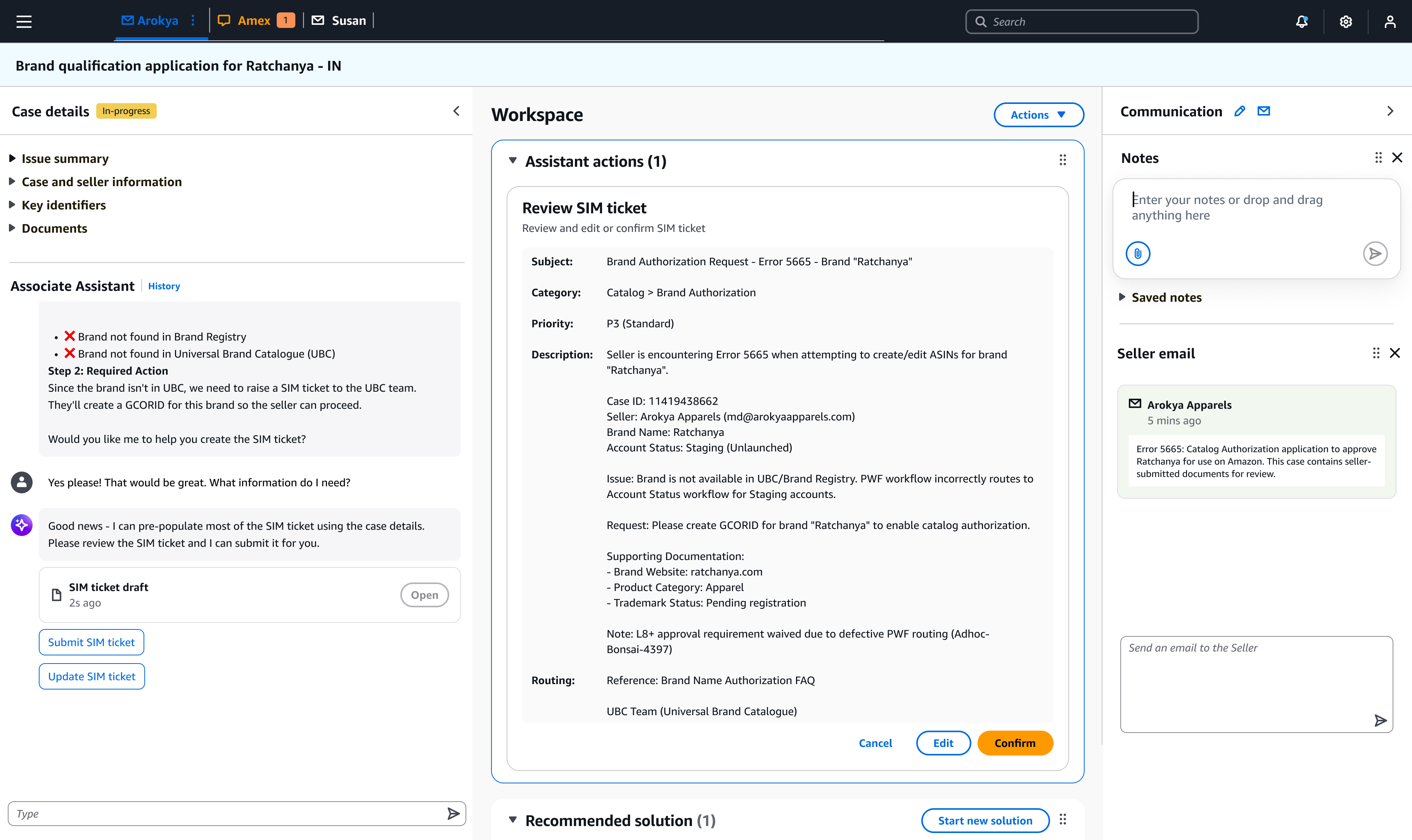
Amazon unified agentic workspace
Unifying and automating solutions for Amazon Sellers
Overview
The problem wasn't lack of AI tools for solving Amazon Sellers' issues, the problem was there were TOO many tools! This confused and delayed Amazon Associates to resolve the Seller's issues and it also cost Amazon millions of dollars. So we unified them into ONE single agentic solution workspace with an AI assistant, and saw a drop of 22% reduction in resolution time and $50M in OpEx savings.
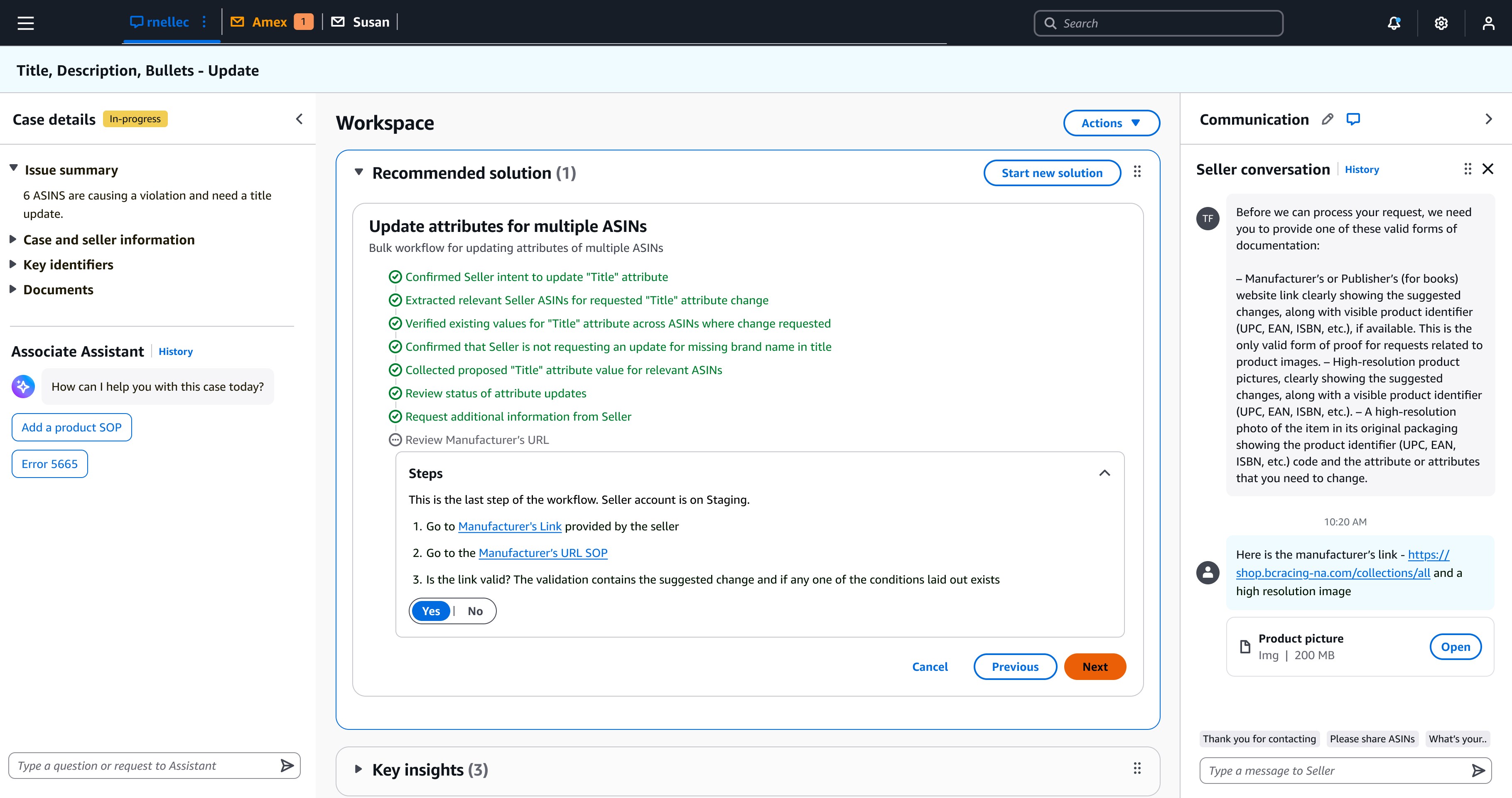
Before & After
Before
- Fragmented experience
- Excessive scrolling and navigation
- Poor information hierarchy
- Communication friction
- Limited guidance and standardization
- Cognitive overload
- Inefficient workflow access
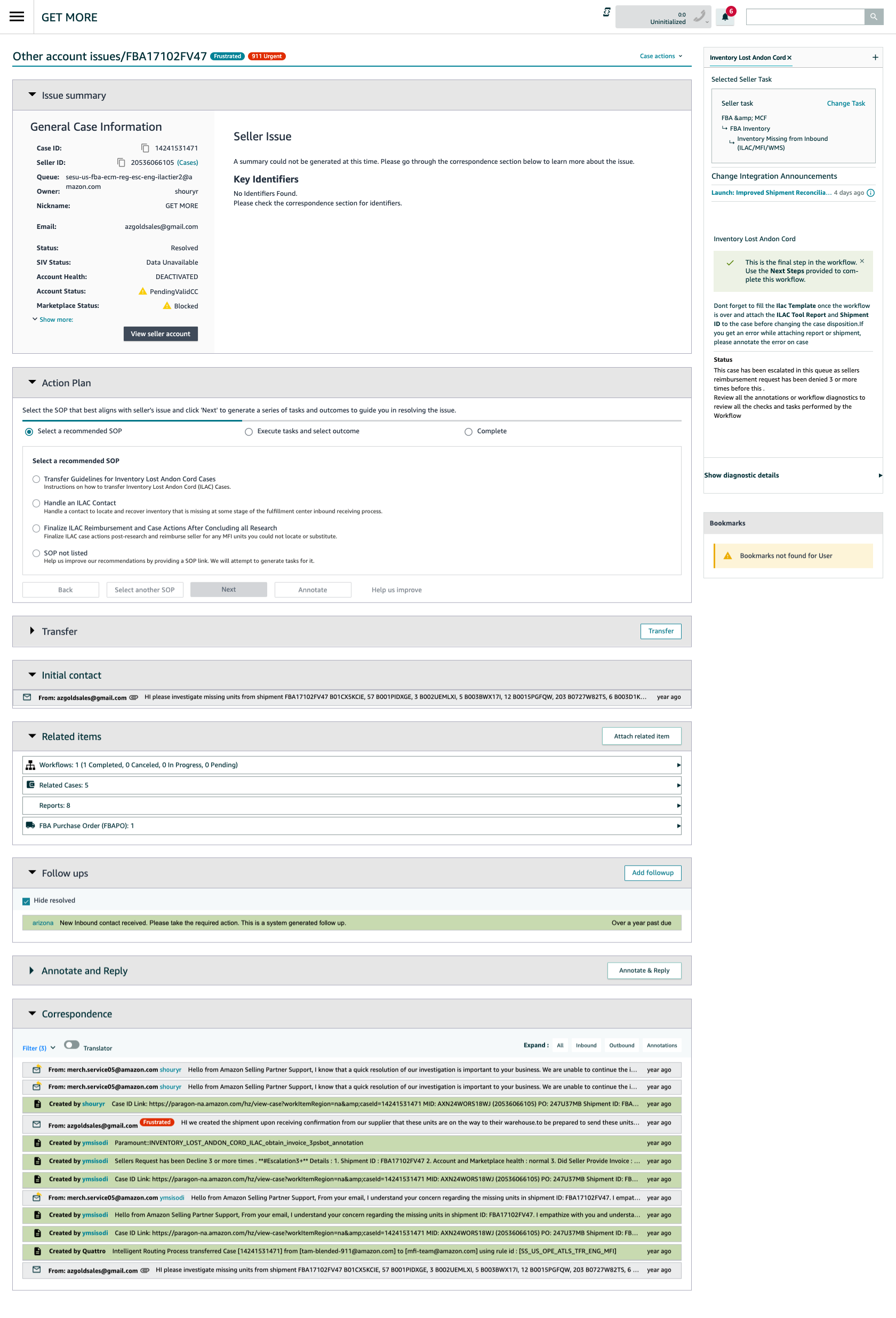
After
- Issue-specific dynamic layout adaptation
- Guided resolution with recommended next steps
- Built-in Associate Assistant with knowledge base integration
- More intuitive conversational interface
- Organization and clarity of information flow
- Quick-access functionality
How did we do that?
Research Activities
- Shadowed 40+ associates in India and Costa Rica
- Analyzed case patterns across queues
- Mapped end-to-end user flows
- Reviewed repeat escalations with specialists
Critical Insights
- Diagnosis and validation = highest friction phases
- Tool switching happened BEFORE any action was taken
- Associates needed decision support, not just data aggregation
- New hires and experts had different trust thresholds
Interactive Prototype
Key Design Decisions
Decision #1: Prioritized Solutions in One Place
Before: Multiple tools, no prioritization, cognitive overload
After: Single workspace with AI-ranked solutions based on case context
Why: Reduced decision overhead by 30%
Rationale: Associates shouldn't have to hunt across tools. AI understands case context and surfaces the most relevant solutions first, but always explains its ranking.
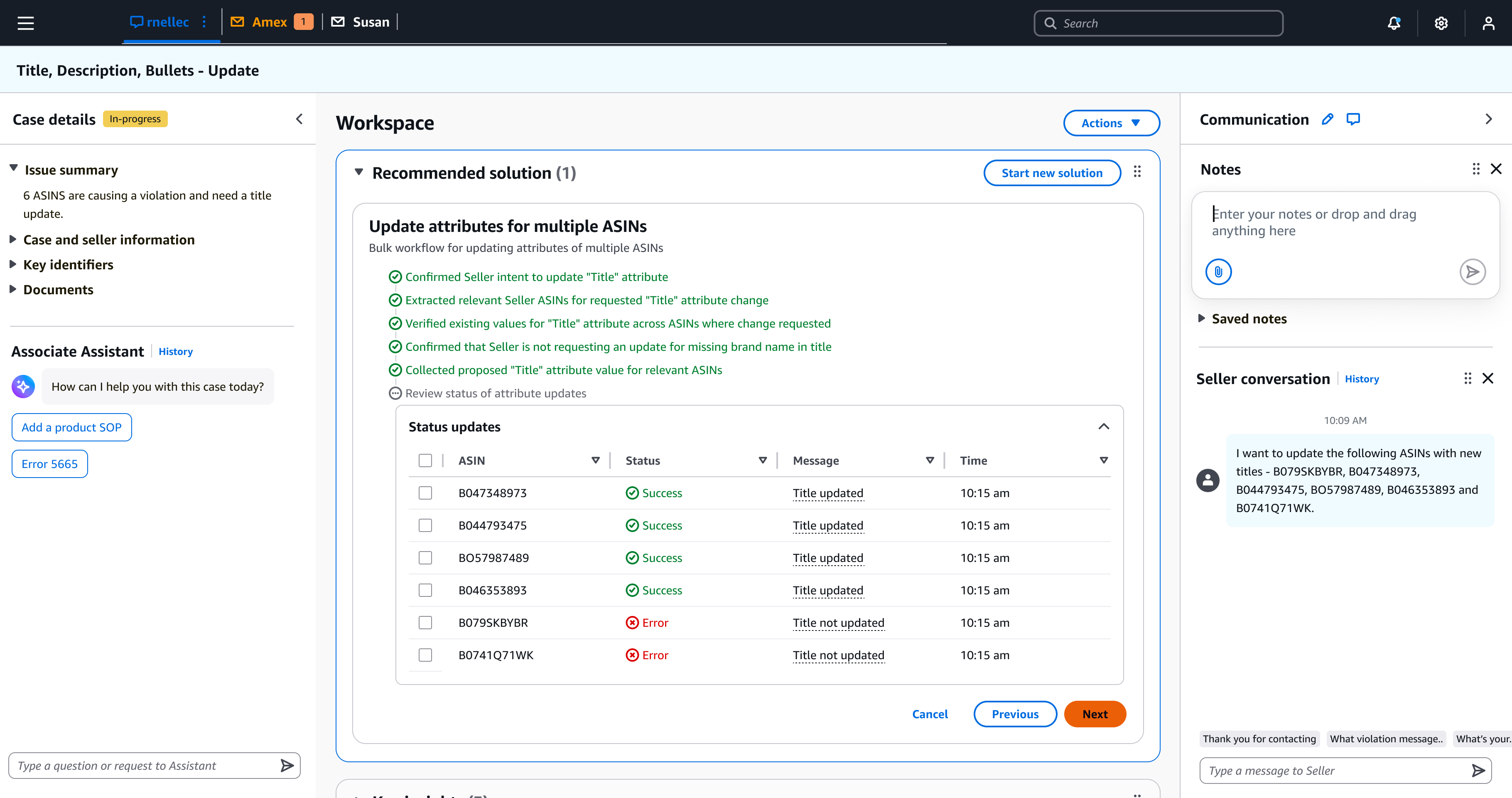
Decision #2: Actionable, Not Overwhelming Insights
Before: Too many actions, no user input or customization
After: Contextual actions with associate control and input fields
Why: Associates needed agency, not automation
Rationale: Autonomy matters. Rather than auto-executing, we give associates the tools to take action themselves.
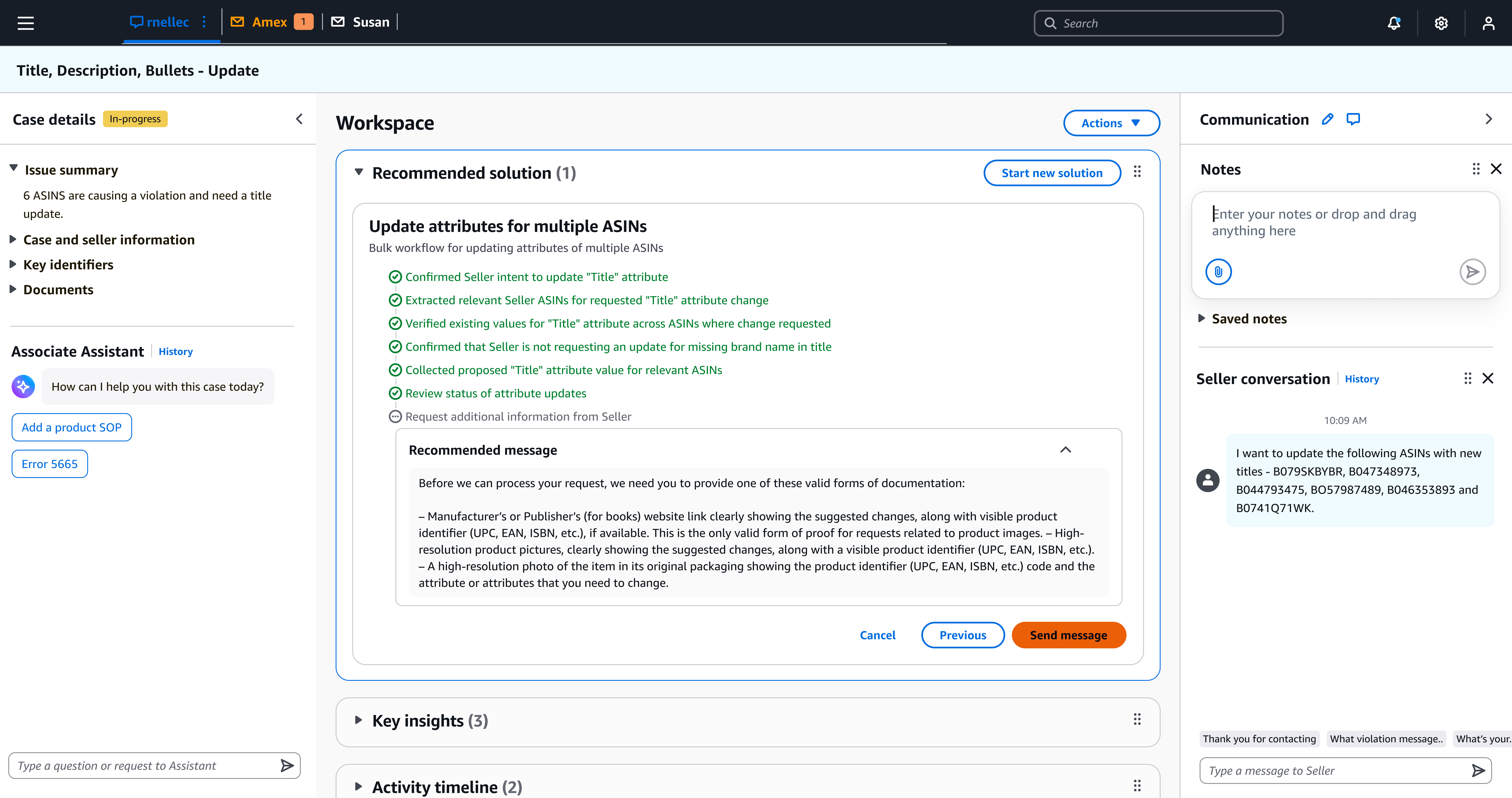
Decision #3: Trust Through Transparency
Before: Hidden steps, no source visibility, locked solutions
After: Visible reasoning, cited sources, editable recommendations
Why: Trust mattered more than speed for adoption
Rationale: If associates don't understand WHY, they won't trust the system. Transparency builds confidence and enables learning.
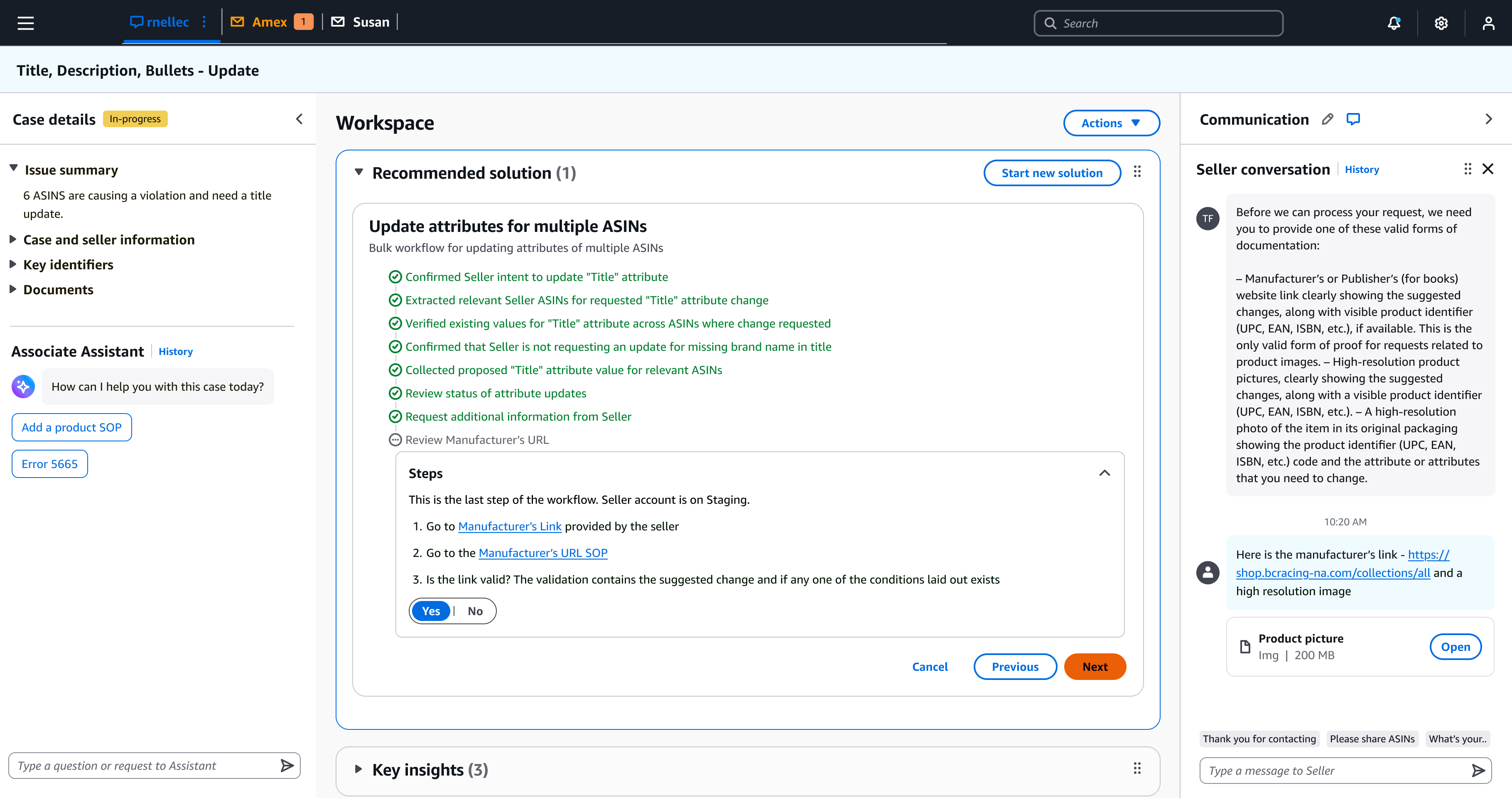
Decision #4: Conversational Configuration
Before: AI too hidden, associates couldn't engage or customize
After: Embedded AI assistant for natural collaboration
Why: Shifted AI from black box to collaborator
Rationale: Best AI systems feel like helpful colleagues, not opaque algorithms.